Get in touch
Cambridge Roof Exchange Ltd
Unit 2 Barton Court, Comberton, Cambridge CB23 7BU. Survey-led industrial roof refurbishment across the UK.


Understand what shapes industrial roof replacement costs in the UK, from asbestos and access to overcladding, and how a survey gives you a reliable budget.
Ben Thomas · Marketing & Sales Co‑ordinator · Cambridge Roof Exchange
8 min read
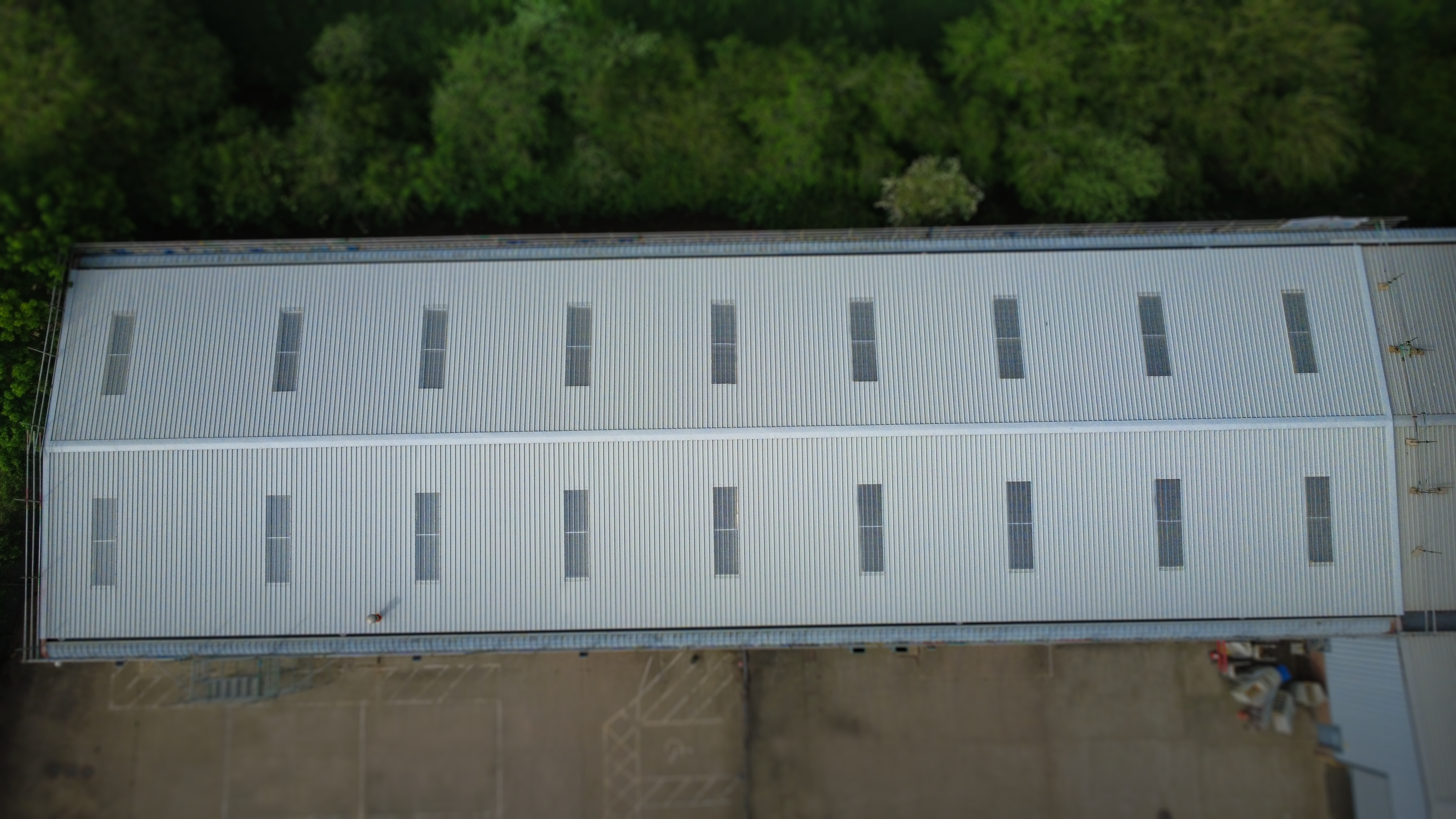
Replacing an industrial roof is a major investment in a building's condition, performance and future use. For warehouse owners, factory operators and facilities managers, the budget has to cover far more than new roof sheets. Insulation, asbestos, access, drainage and working above an operational business all affect the final cost.
This guide explains what drives the price of an industrial roof project, why a single square-metre rate rarely tells the full story, and how two completed Cambridge Roof Exchange projects show different approaches in practice.
Industrial roofs vary enormously, so any generic rate should be treated with caution. Two buildings of the same size can need very different budgets depending on the roof system, the condition of the existing covering, access, the presence of asbestos and the way the building is used.
The most reliable route to an accurate figure is a survey. It establishes the condition of the existing roof and shows whether repair, overcladding or full replacement is the right solution. The most useful comparison is then between quotations built on the same specification, because a lower headline price may cover fewer rooflights, a different insulation system or a narrower scope of gutter repairs.
Roof area affects material quantities and installation time, but it is only one factor.
An accessible warehouse with a simple roof layout is a different project from a factory with several roof levels, ventilation equipment and restricted working hours. The condition of the existing roof also determines how much preparation, removal and repair is needed before installation can begin.
A detailed quotation should address:
Identifying these items early makes the budget more reliable and reduces surprises once work starts.
Complete removal is not always necessary. Where the existing roof and supporting structure are suitable, overcladding places a new external covering over the original roof, and additional insulation can be built into the new roof make-up. This can reduce strip-out and waste, and it keeps the building weathertight throughout installation. Whether it suits a particular building depends on the existing condition, structural capacity and the proposed system.
Cambridge Roof Exchange's Waterbeach commercial roof overclad shows the approach in practice. The two-week project delivered new weathering sheets, additional insulation, replacement rooflights and new gutter liners. The building stayed operational throughout, and the completed system carries a 40-year warranty. The property was also enrolled on an annual roof maintenance programme after completion. That warranty belongs to this project and should not be assumed for every refurbishment. Read the Waterbeach roof overcladding case study
For a busy business, the financial comparison should weigh the construction price against the operational impact of the programme.
Full replacement may be the right choice where the existing roof has deteriorated substantially, where underlying components need attention, or where keeping the old covering would compromise the proposed refurbishment. Stripping the roof also exposes components that would otherwise stay hidden, so necessary repairs can be made before the new system goes on.
At SRS Aromatics in Bury St Edmunds, Cambridge Roof Exchange removed the existing asbestos roof and installed a 130mm composite roofing system. The nine-week refurbishment also covered replacement rooflights and upgrades to flashings, gutters and parapets. Read the SRS Aromatics roof refurbishment case study
The lesson for budgeting is that an industrial roof project should cover the whole roof assembly and its details, not just the visible outer sheets.
Asbestos needs early attention on older industrial buildings. The Health and Safety Executive advises that a building built or refurbished before 2000 should be assumed to contain asbestos until information shows otherwise. Source: HSE guidance on identifying asbestos
Where planned work could disturb asbestos, the survey and work plan must address the affected materials. HSE distinguishes between management surveys, which support normal occupation, and refurbishment or demolition surveys, which are designed to locate materials that more intrusive work could disturb. Source: HSE asbestos survey guidance
The cost depends on the material, its condition, the extent of the work and the controls required. A general roof condition survey is not a substitute for the appropriate asbestos survey. Overcladding should also never be assumed to settle asbestos obligations automatically: any proposal to leave asbestos-containing materials in place needs a proper assessment and a plan for managing them.
For many businesses, disruption matters as much as installation cost. Restricted deliveries, relocated stock and interrupted production all feed into the real project budget, so the roofing programme should reflect how the building actually operates. Working areas, access routes, protection below the roof and any temporary restrictions need to be agreed before work begins.
Waterbeach is a documented example of a refurbishment completed while the building stayed in use. Continued occupation still depends on the work involved and the controls needed on each site, so it should be planned into the project rather than assumed.
A roof refurbishment is a chance to deal with several building issues together. Additional insulation can improve thermal performance, and replacement rooflights can bring more daylight into the working space. The financial benefit depends on the building's condition, heating needs, operating hours and lighting controls, so no fixed percentage saving on energy bills should be assumed without a building-specific assessment.
Drainage deserves equal attention. Replacing the main covering while leaving tired gutters, outlets or junctions untreated can leave important sources of water ingress unresolved. At Waterbeach, rooflights and gutter liners formed part of the overcladding works. At SRS Aromatics, gutters, flashings and parapets were included alongside the new roof. Both projects show the value of assessing these elements together.
If solar panels are likely in future, the roof specification should anticipate them. Coordinating the two projects helps avoid fitting panels to a covering that will soon need major work.
The SRS Aromatics refurbishment included preparation for a future solar installation. The case study is clear that any later solar project would need its own assessment of structural capacity, panel layout and suitable fixings. View the SRS Aromatics solar preparation project Putting solar plans into the initial brief lets the roofing specification reflect the building's longer-term use.
The strongest starting point is a survey followed by a clearly defined scope, which establishes the refurbishment method, the associated repairs and the practical requirements for delivery.
When comparing proposals, look at the specification, exclusions, programme and warranty alongside the total price. A suitable system with properly detailed drainage and a realistic working plan is a firmer basis for investment than a square-metre rate alone.
Cambridge Roof Exchange provides no-obligation quotes for industrial roof refurbishment. Request an industrial roof survey or browse the company's completed roofing case studies to compare different refurbishment approaches.
The price depends on the roof area, the system specified, the condition of the existing roof, access, asbestos and the associated work. A survey and a written quotation based on a clear scope give a far more reliable figure than a generic rate. Request an industrial roof survey
Overcladding can reduce removal and disposal work, but the overall saving depends on the building and the proposed system. Structural suitability and the condition of the existing roof must be assessed before prices are compared.
In some cases, yes, with suitable planning and controls. Cambridge Roof Exchange's Waterbeach project stayed operational throughout its refurbishment. Other buildings may need phased working or temporary restrictions.
The programme depends on roof area, complexity, access, weather and the extent of associated repairs. Cambridge Roof Exchange's published examples include the two-week Waterbeach overclad and the nine-week SRS Aromatics refurbishment. These are individual project durations, not standard timescales.
The right approach depends on the condition of the materials and the proposed work. Decisions about retaining, managing or removing asbestos require an assessment of the risks and the refurbishment scope. Source: HSE asbestos survey guidance
They should be assessed during the survey and clearly included or excluded in the quotation. Dealing with deteriorated rooflights and drainage during the main refurbishment can avoid a separate programme of work later.
A replacement roof can be specified with future solar in mind. Structural capacity, the mounting system and compatibility with the roofing system still need to be checked before panels are installed.
Get in touch
Send us the site details, drawings or photos and we'll advise whether the right route is repair, overclad, replacement or asbestos removal. No obligation.