Get in touch
Cambridge Roof Exchange Ltd
Unit 2 Barton Court, Comberton, Cambridge CB23 7BU. Survey-led industrial roof refurbishment across the UK.


A commercial roof's warning signs, from persistent leaks and ponding water to ageing asbestos sheets, tell you whether a repair will do or it's time to replace the whole system. This guide walks through all ten signs and gives a quick way to decide which one applies to you.
Ben Thomas · Marketing & Sales Co‑ordinator · Cambridge Roof Exchange
5 min read
Your roof is quietly doing one of the most important jobs on your site: keeping weather out of your building, your stock, and your operations. The trouble is, roofs rarely fail all at once. They fail gradually, one small leak or crack at a time, until a manageable repair job has turned into an expensive emergency.
Below are the ten warning signs worth knowing, plus a straightforward way to decide whether you're looking at a repair or a full replacement.
Every roofing material has a realistic service life:
If your roof is in this range, or you're not sure when it was last replaced, a professional inspection is the sensible next step, well before a problem forces the decision for you.
One leak is a repair job. Leaks in several different areas, or the same leak returning after being fixed, usually points to a roofing system that's failed more broadly. Watch for:
At this stage, patch repairs tend to become a recurring cost rather than a fix.
Years of UV exposure, rain and temperature swings cause roofing materials to expand and contract until they crack. Look out for cracked membranes, surface blistering, splits in felt, open joints and loose seams, all of which give water a way in and let structural damage build up out of sight.
If water is still sitting on a flat roof more than 48 hours after rainfall, that's ponding, and it's a red flag, not a minor drainage quirk. Standing water accelerates material breakdown, adds structural load, encourages algae and moss, and finds every weak point in the membrane. Persistent ponding usually means the drainage design or the roof deck itself has failed.
An ageing roof loses insulating performance long before it visibly fails. Damaged insulation lets heat escape in winter and lets it in during summer, so heating and cooling systems work harder, and cost more, to compensate. Modern roofing systems offer a meaningful thermal upgrade over roofs installed even 15 to 20 years ago.
Repeated call-outs for isolated damage are normal. Repeated call-outs for the same roof, year after year, are a sign the repairs are delaying an inevitable replacement rather than solving the problem. At a certain point, the cumulative cost of patchwork repairs outweighs the cost of a new roof, one that typically comes with a manufacturer-backed warranty.
Flashings seal the vulnerable joints around roof edges, skylights, penetrations, chimneys and ventilation units. When they start to fail, water gets in fast. Widespread flashing failure often goes hand in hand with an ageing roofing system and is a strong indicator that replacement, not another round of local repairs, is the right call.
A sound commercial roof should sit level. Visible dips or sagging sections can signal water damage, structural movement, rotten decking, failed insulation, or excess loading. This is the one warning sign that should never wait for a routine inspection: structural issues carry real safety risk and need investigating promptly.
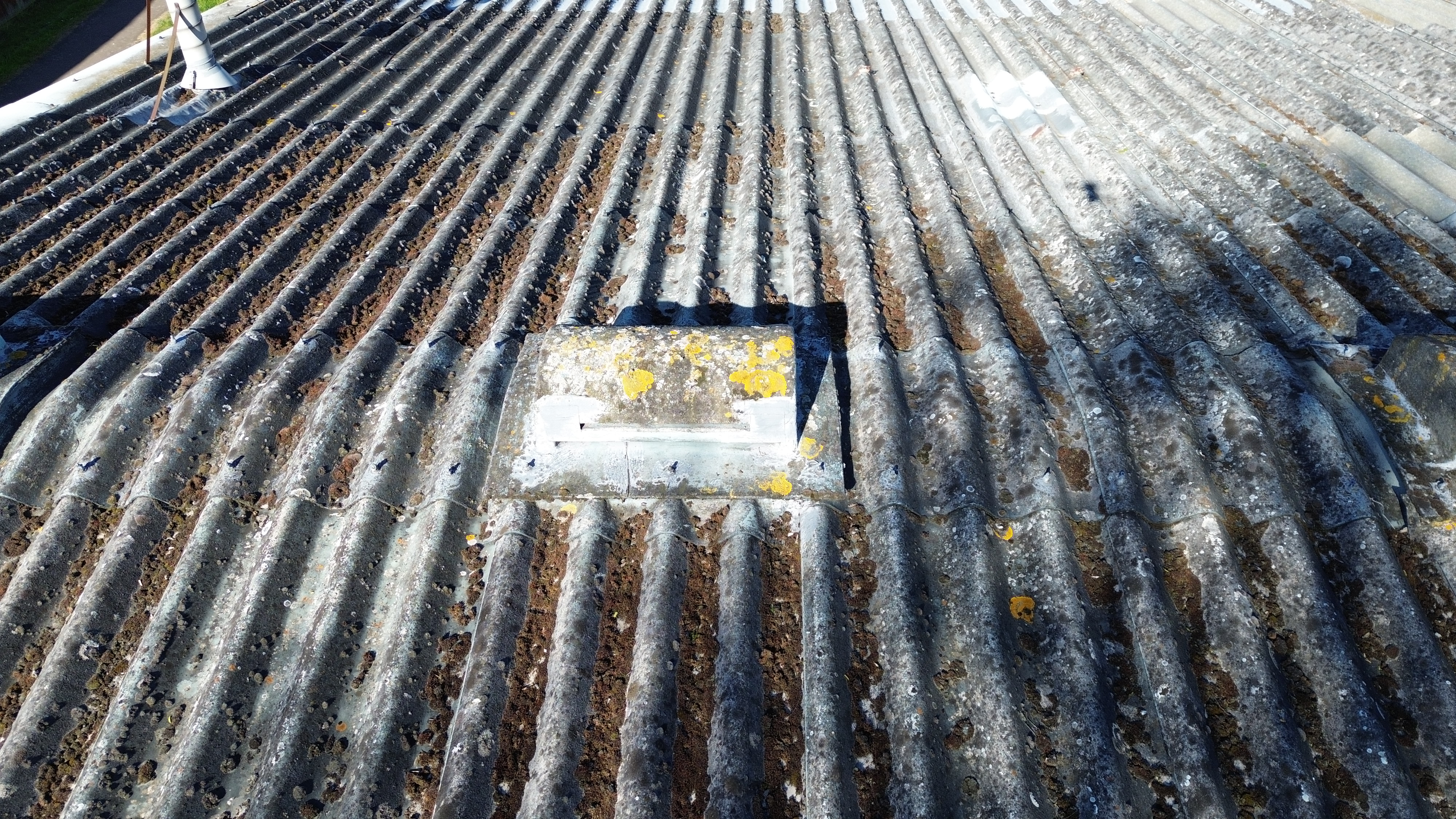
Many older industrial, agricultural and warehouse buildings still have asbestos cement roof sheets. Asbestos isn't inherently dangerous while it's undisturbed and in good condition, but as sheets age, they become brittle, cracked and weathered. If yours is deteriorating, replacement by a licensed specialist is the safest long-term route, and it usually brings a worthwhile upgrade in insulation, appearance and overall performance too.
Sometimes nothing is technically wrong: the building has simply outgrown the roof. A modern commercial roofing system can offer better insulation, stronger weather protection, solar panel compatibility, improved fire performance, longer warranties and lower ongoing maintenance. For buildings adapting to new uses, such as added cold storage, heavier plant, or higher throughput, replacement can be as much about future-proofing as fixing a problem.
Repair is usually enough when:
Replacement is usually the better investment when:
Commercial and industrial roofing projects demand careful planning, technical know-how and strict health and safety compliance, especially where asbestos removal is involved. An experienced contractor designs and installs to current industry standards while keeping disruption to your operations to a minimum.
How long does a commercial roof last?
It depends on the material: 15 to 25 years for built-up felt, 20 to 30 for single-ply membranes, 25 to 35 for EPDM rubber, and 30 to 50+ years for metal roofing.
Is ponding water on a flat roof serious?
Yes. Water standing for more than 48 hours after rain accelerates deterioration and often signals a drainage or structural fault, not just a temporary puddle.
Is it safe to leave an ageing asbestos roof in place?
Undisturbed, intact asbestos roofing is generally low-risk. Once sheets become brittle or cracked, replacement by a licensed specialist is the safest option.
How do I know if I need a repair or a full roof replacement?
Isolated, localised damage on a relatively new roof usually just needs a repair. Multiple leaks, rising repair costs, structural sagging, or a roof nearing the end of its lifespan point to replacement being the better long-term investment.
Small roofing issues rarely stay small. Left unchecked, they turn into expensive emergency repairs, operational downtime, and damage that spreads well beyond the roof itself. Regular inspections catch problems early, but when replacement is genuinely the right call, a modern roofing system can deliver decades of reliable protection.
Noticed any of these warning signs on your building? Book a professional survey to find out exactly where you stand.
Get in touch
Send us the site details, drawings or photos and we'll advise whether the right route is repair, overclad, replacement or asbestos removal. No obligation.