Get in touch
Cambridge Roof Exchange Ltd
Unit 2 Barton Court, Comberton, Cambridge CB23 7BU. Survey-led industrial roof refurbishment across the UK.

Great Chesterford
2 week project, 2026
Great Chesterford
2 week project, 2026

The challenge
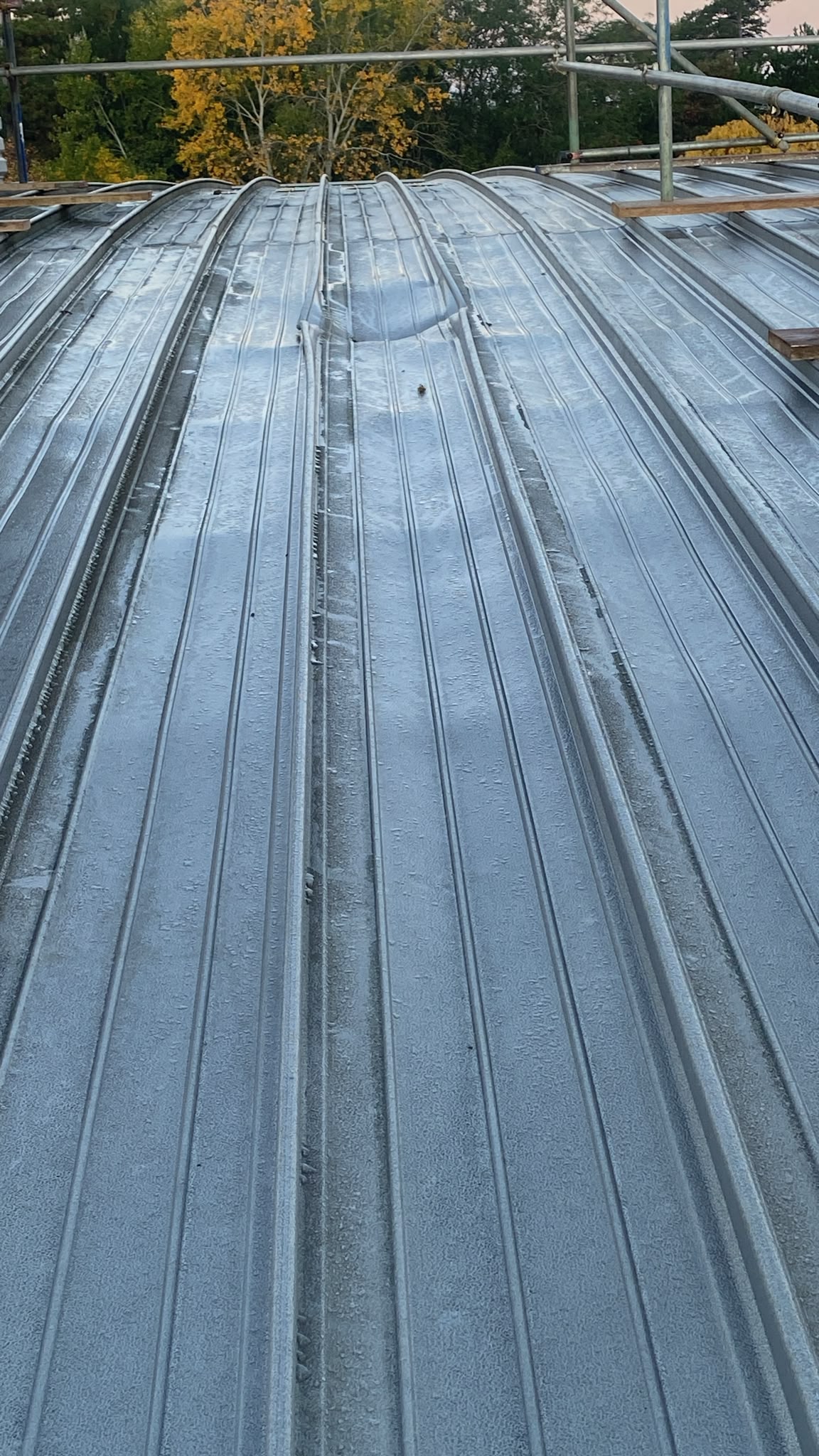
After recent storms, the aluminium standing seam roof of a laboratory building on a science park south of Cambridge was hit by impact damage. Several sheets ruptured, which left the roof open to the weather. The building was in the middle of a major refurbishment, and we were already on site for the refurbishment contractor replacing extract cowls and sealing redundant penetrations. That meant we could deal with the damage quickly, before it affected the building or its new fit-out.
The roof is Euroclad stucco embossed aluminium standing seam: 0.9 mm thick, on a 400 mm module, with a 75 mm seam height. The original sheets were joined end to end with site-welded end laps, so there was no question of unbolting a damaged panel and fixing in a new one.
Why it’s specialist work
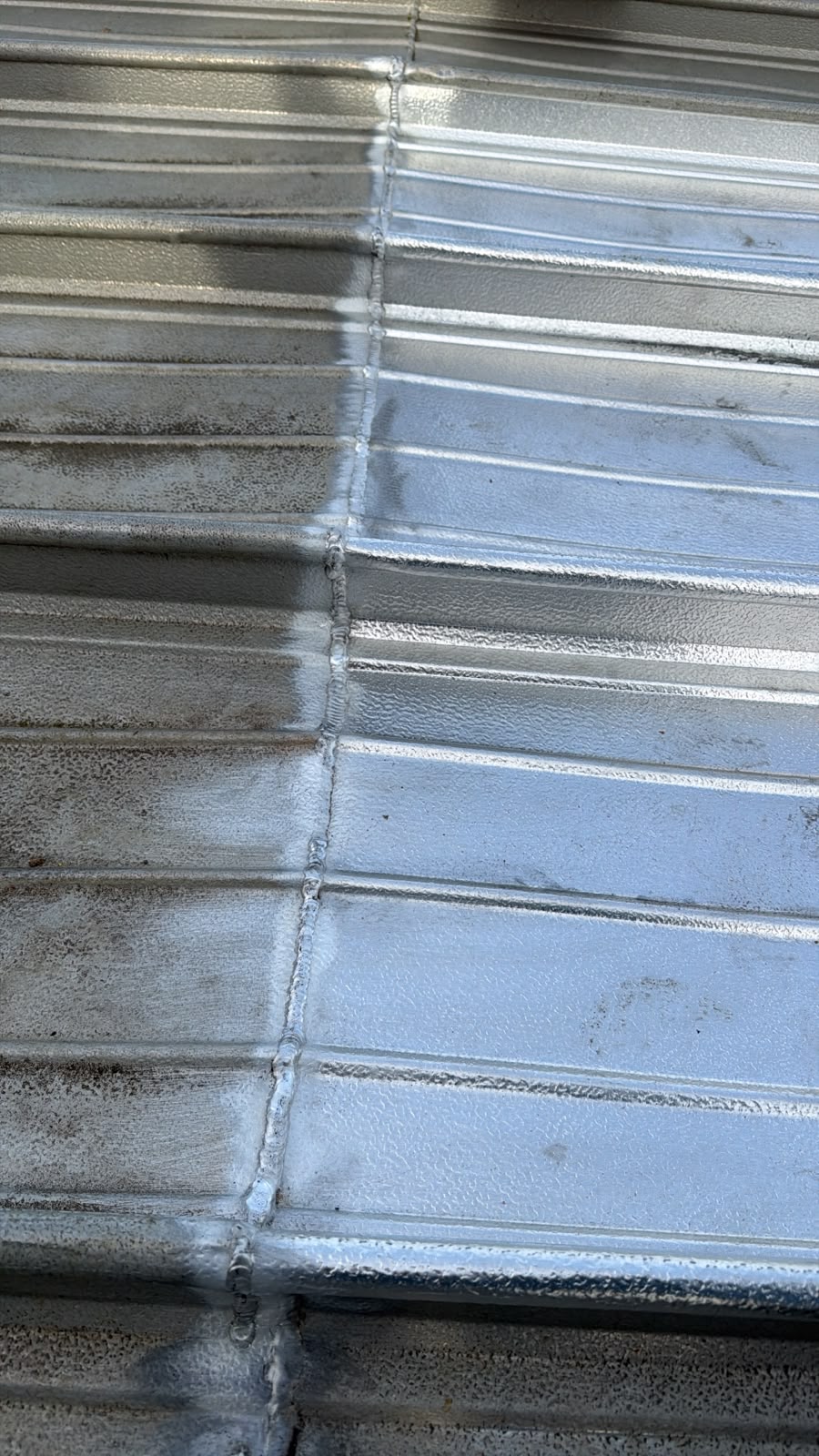
Standing seam sheets are held to the structure by concealed clips. Each one is zipped closed along its seams to the sheets on either side, so taking one out means opening up the roof around it without damaging the sheets that stay. Welding aluminium on site is a further step that few roofing contractors offer. The metal draws heat away quickly, its oxide layer has to be cleaned off before welding, and a poor weld can burn through or crack. Every end-lap weld runs across the full profile of the sheet, over each rib and seam, and has to be watertight along its whole length. Without that skill, the usual options are a sealant patch that won’t last or replacing a much bigger area of roof.
What we did
Our team worked from the scaffold already up for the refurbishment. They unzipped the seams around the damaged sheets, cut out the ruptured sections and fitted new sheets matching the original Euroclad specification. They then zipped the seams closed again and welded the end laps in place where the new sheets meet the existing roof [using … welding], giving each joint a continuous seal as the original design intended. The rest of the roof stayed as it was, and the refurbishment carried on around the work.
The result
The roof is watertight again, and the client avoided replacing a large area and having to rely on a temporary repair. The new sheets are joined to the existing roof the same way the originals were, so the repair works as part of the roof as a whole and is not a weak spot.
Why it matters for building owners
Aluminium standing seam roofs are common on laboratories, offices and higher-spec commercial buildings, and they last well when they’re looked after. Storm damage, foot traffic or plant installation don’t have to mean a large repair bill. If the damaged sheets are replaced to the original specification and properly joined back into the roof, it keeps working as designed.