Get in touch
Cambridge Roof Exchange Ltd
Unit 2 Barton Court, Comberton, Cambridge CB23 7BU. Survey-led industrial roof refurbishment across the UK.


Britain’s warehouse roofs could generate 36,000 GWh of solar a year. Why the roof underneath is the real bottleneck, and what to check first.
Ben Thomas · Marketing & Sales Co‑ordinator · Cambridge Roof Exchange
8 min read
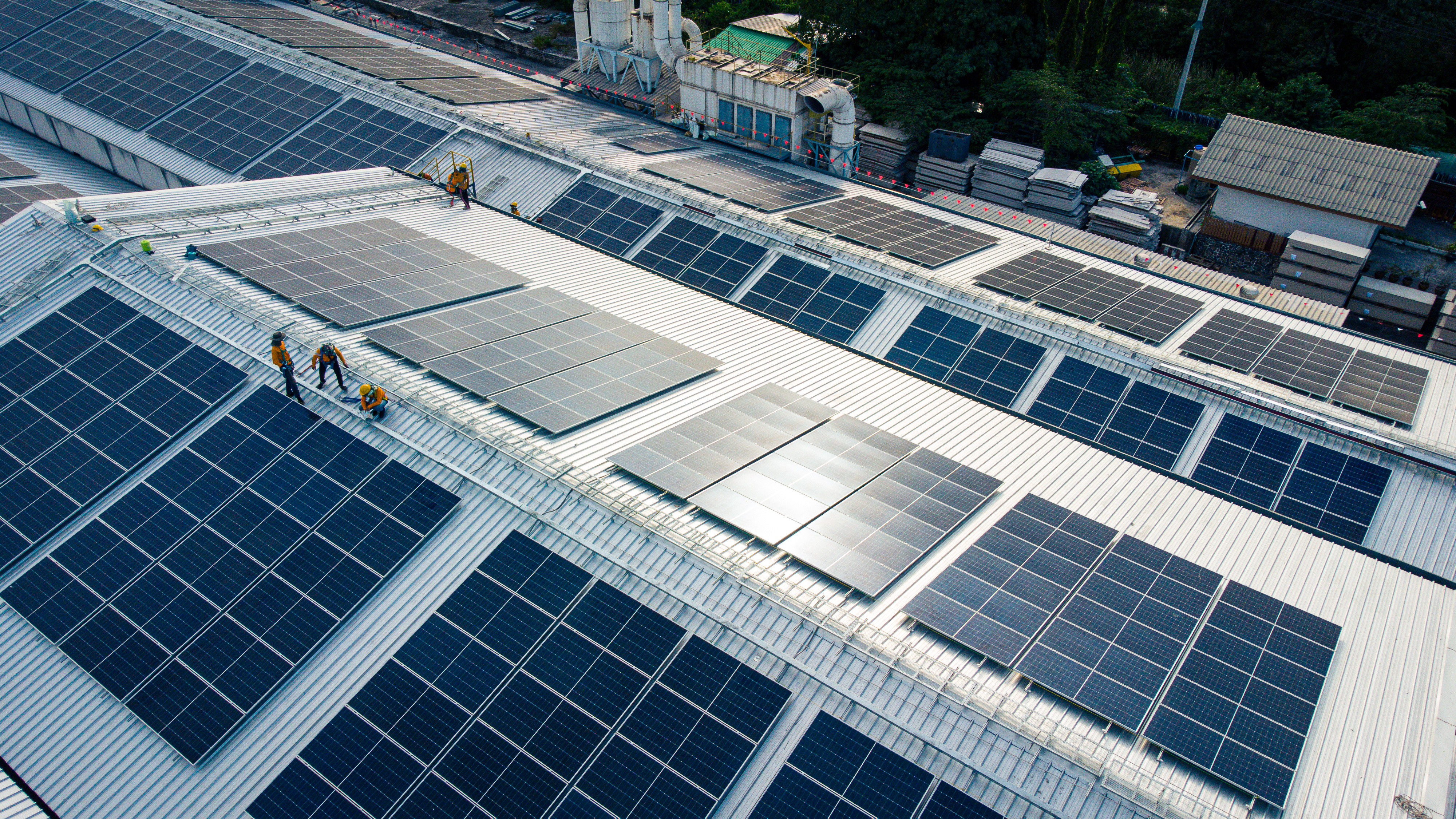
Last week, a figure did the rounds in the property and energy press that should make every warehouse owner look up. Research by property consultancy Cushman & Wakefield found that Britain’s industrial and logistics buildings could generate around 36,486 GWh of solar electricity a year if their available roof space were used, a finding Highways Today covered on 13 November alongside a wider look at what is holding warehouse solar back. The same research puts the usable roof space on large UK logistics and industrial properties at more than one billion square feet.
That’s a huge, untapped resource sitting on top of buildings that already exist, already have a grid connection and, in many cases, already use a lot of electricity during the day. So why is so little of it being used? When the UK Warehousing Association used satellite imagery to check more than 300 verified warehouse rooftops, it found solar on only about 5% of them.
The usual explanations are grid connections, leases and finance. All of them are real. But from where we stand, which is usually on top of these buildings, there’s a more basic problem that gets far less attention. A lot of Britain’s warehouse roofs simply aren’t fit to carry 25 years of solar panels.
Even the energy companies are saying it
This isn’t just roofers talking up roofing. Good Energy, which is lobbying the Government to extend business rates relief for building improvements, had its Managing Director of Services, Carl Hogg, list the condition of the roof among the practical barriers holding projects back, alongside the landlord–tenant relationship, finance and grid connection difficulties.
The picture is the same at portfolio level. Two-thirds of the property businesses in the Cushman & Wakefield survey said they had adopted solar or were installing it, yet only 15% had rolled it out across more than half of their portfolio. Plenty of owners like the idea. Far fewer have buildings where it’s straightforward, and our experience is that the easy roofs get done first, while the older ones sit on the “later” list.
The 25-year mismatch
Here’s the trap. Solar panels are designed to sit on a roof for decades. Many of the roofs they’d be going on were installed in the 1970s, 80s and 90s, and some have ten years of life left, if that. The panels might be brand new; the sheets, fixings, laps and gutters underneath them are not.
Put panels on a roof like that and you’ve created a problem with a date on it. When the roof underneath fails, the array has to come off, be stored, and go back on again once the roof is replaced, with the electrician, the roofer and the scaffolder all back on site. The Highways Today analysis makes the point that a PV system meant to run for decades is hard to justify on a roof that is nearing major refurbishment, particularly when taking panels off and refitting them adds significant cost.
The other side of that coin is the opportunity. Replacing an ageing roof, as the same analysis notes, gives owners a chance to build in structural improvements, mounting arrangements and electrical infrastructure as part of one programme, with one set of access equipment, one period of disruption and one design that considers loading, drainage, waterproofing and maintenance access together. Done in that order, the roof and the panels start their lives at the same time, and should end them at roughly the same time too.
Who pays for the roof?
This is where solar on existing warehouses gets awkward. Warehouse operators, according to Highways Today’s report, often lease their buildings from institutional landlords or property investors, which leaves one organisation responsible for the roof and another paying the electricity bill. The tenant sees the savings from solar; the landlord carries the cost of the roof that makes it possible.
Those projects can need agreements covering roof access, maintenance, insurance, repairs, who owns the generating equipment and what happens when the tenant’s lease ends. Add a roof replacement into that conversation and it gets harder still, because now someone has to fund a large capital project whose main benefit, cheaper electricity, lands with somebody else.
There’s no single answer to that, but there is a practical starting point. A clear, independent picture of the roof’s condition and remaining life gives both sides something solid to negotiate around. It’s much easier to agree who pays for what when everyone knows whether the roof has five years left or twenty-five.
The roof has to work for the panels, too
Even a roof in good condition has to be designed around an array, not just have one bolted to it. A structural assessment has to confirm the building can carry the panels, mounting systems and associated equipment, and the Highways Today piece lists wind uplift, roof condition, drainage and maintenance access as factors that all shape the design. Rows of panels change how water moves across a roof and where debris collects. They also add penetrations and fixings to a surface whose whole job is to keep water out.
Good examples show what joined-up thinking looks like. At the BSH distribution centre in Corby, Good Energy’s installation of around 1,200 panels is expected to generate roughly 550 MWh a year, with an estimated 70% to 80% used on site. The building stayed in use throughout, the electrical design includes a firefighter gateway that shuts the system down automatically when the fire alarm goes off, and provision was made for safe roof access for future maintenance. That last point matters more than it sounds: panels need cleaning and servicing, and the roof under them still needs inspecting, so getting people up there safely has to be planned from day one.
Three questions to ask before anyone quotes you for panels
How long has the roof actually got? Not the age on the drawings, but what a proper survey says about the sheets, fixings, laps and gutters today. If the honest answer is less than the life of the panels, sort the roof first. It will cost less now than it will once there’s an array in the way.
What is it made of? A large share of pre-2000 industrial buildings still have asbestos cement roofs. These are fragile, they become more brittle with age, and they are not something you want to be drilling, loading or walking on to install an array. If that’s what you have, the conversation is about overcladding or replacing the roof before solar is even on the table.
Will you use the power? The financial case for warehouse solar, as Highways Today explains, is strongest where the building uses the electricity it generates during the day, which reduces reliance on export arrangements. Buildings with refrigeration, automation or long operating hours tend to suit it well. If your daytime demand is low, the system may need to be sized differently, or paired with storage, before the numbers stack up.
What it looks like when it’s done in the right order
Some of our most interesting jobs have started with a conversation about solar. Wenzels The Bakers came to us with one simple request: they wanted solar panels on their roof. Getting the roof ready for them became a 14-week project including gutter refurbishment, because there was no point putting long-life panels on a roof that wouldn’t last as long.
For SRS Aromatics in Bury St Edmunds, we replaced the asbestos roof with a 130mm composite system and new rooflights, ready for future solar panels. The client now has a roof that will outlast any array they put on it, with better insulation and more natural daylight in the meantime. When they’re ready for panels, the hard part is already done.
Don’t wait for the regulations to force it
New buildings are already being pushed in this direction. England’s Future Homes and Buildings Standards are due to apply to most relevant building work from 24 March 2027, but they mainly cover new work and don’t create a general requirement to retrofit solar across existing warehouses. For the buildings already standing, it’s down to owners to act.
There are incentives for those who do. A business rates exemption for eligible on-site renewable generation and storage equipment, reported by Highways Today, is scheduled to run until 31 March 2035, and Good Energy is pushing for wider relief on building improvements. Whether or not that happens, the owners who move first will be the ones whose roofs are ready when the economics, the lease or the next energy price spike tips the decision.
Start with what’s underneath
If solar is on your radar, even loosely, the most valuable thing you can do now is find out what’s under the panels before you buy them. Our earlier article, Industrial Roofs and Solar: Is Your Roof Ready?, goes into the technical checks in more detail.
Britain’s warehouse roofs could be one of its biggest power stations. But every power station needs solid foundations, and on a warehouse, that’s the roof.
Get in touch
Send us the site details, drawings or photos and we'll advise whether the right route is repair, overclad, replacement or asbestos removal. No obligation.